

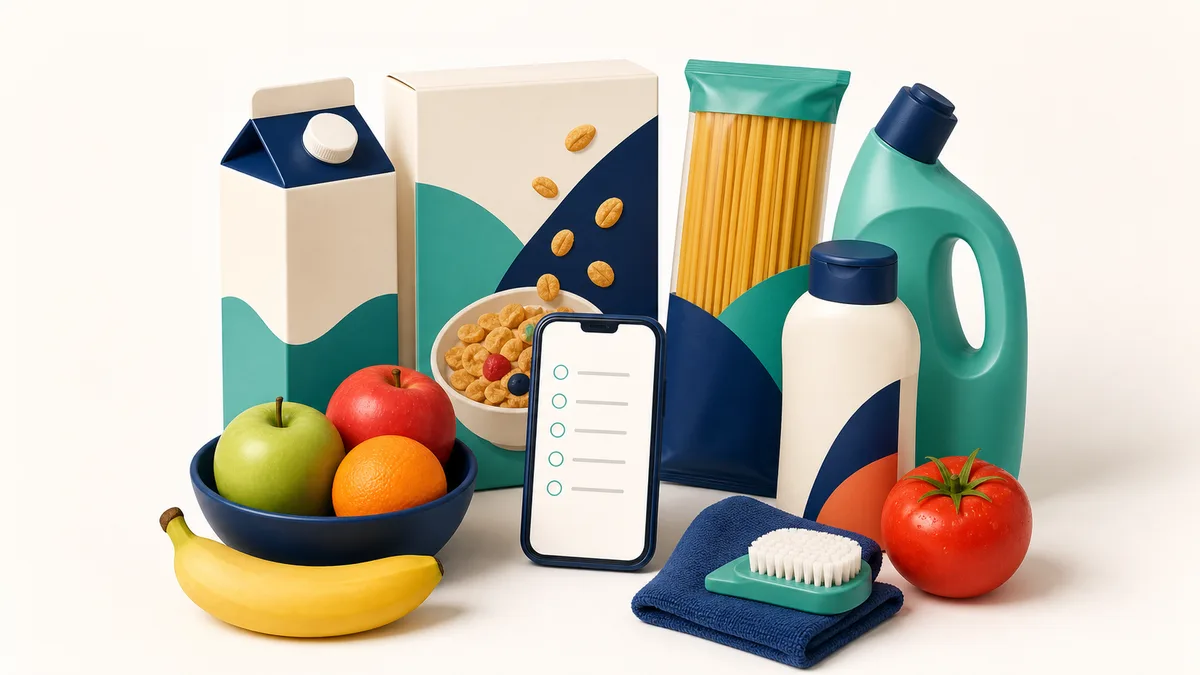
What does FMCG mean?
FMCG stands for Fast Moving Consumer Goods.
The category includes:
- food,
- drinks,
- household care,
- toiletries,
- other products people buy often and replace quickly.
These products usually involve strong competition, low-to-medium price points, and frequent purchase cycles.
From a marketing perspective, FMCG is demanding because a brand needs to be remembered, chosen, repeated, and defended against close substitutes. That is why terms such as brand awareness, couponing, and retail media are deeply connected inside this category.
For commercial teams, this means that timing, availability, and relevance near the purchase moment often matter as much as classic reach.
Why is FMCG not planned like a slow-consideration category?
In many FMCG categories, the shopper is not making a long rational decision.
They are reacting to:
- memory,
- price,
- packaging,
- availability,
- ease of choice.
That means the strongest marketing systems usually combine broad memory building with tactical activation. A campaign has to make the brand easy to recall and easy to choose.
This is why purchase-adjacent media matters so much. A media contact inside a relevant shopping context can do more than a generic impression because it shows up closer to the actual decision. That makes shopper marketing and audience signals especially valuable in FMCG.
Where do retail media and shopper marketing fit?
FMCG is where retail media and shopper marketing become more than channel labels. They help translate media activity into moments where the shopper is closer to category choice, promotion response, or basket planning.
| Layer | What the brand needs | Typical FMCG role |
|---|---|---|
| Memory | Be remembered before the shop | Awareness, reach, distinctive assets |
| Availability | Be easy to buy or consider | Distribution, visibility, category presence |
| Activation | Trigger a concrete choice | Coupon, offer, add-to-list, trial mechanic |
| Learning | Understand what worked | ROAS, uplift, category signal, report |
Purchase-adjacent channels matter most when the category is highly substitutable and the final choice is still open until very late in the journey.
That is often true when:
- price or promotion can change the basket,
- the product is bought routinely,
- several brands are mentally available at once,
- the brand needs to win the shopper before the shelf moment.
How does Listonic Ads fit the FMCG story?
Listonic Ads operates during shopping planning, which is a highly strategic moment for FMCG brands.
It is the stage where household needs begin to turn into product choices, preferred brands, and shopping intent. For marketers, that makes the environment more commercially meaningful than a purely passive media exposure.
It also creates a stronger bridge to ROPO, because the campaign can shape an offline purchase that happens later in-store. That gives FMCG teams a better way to explain why shopping-list media belongs in a serious sales and category growth conversation.
What should an FMCG marketer measure?
There is no single FMCG KPI. Measurement should follow the job of the campaign.
Useful groups include:
- brand memory: reach, frequency, ad recall, brand lift,
- activation: coupon activation, add to list, trial, promotional response,
- commercial effect: repeat purchase, category share, uplift, ROAS,
- planning quality: which shopper segment, category context, or shopping mission responded.
A strong FMCG page should therefore go beyond a dictionary definition. It should explain the category, the purchase behavior, the role of promotions, and the value of channels that work closer to the decision.